
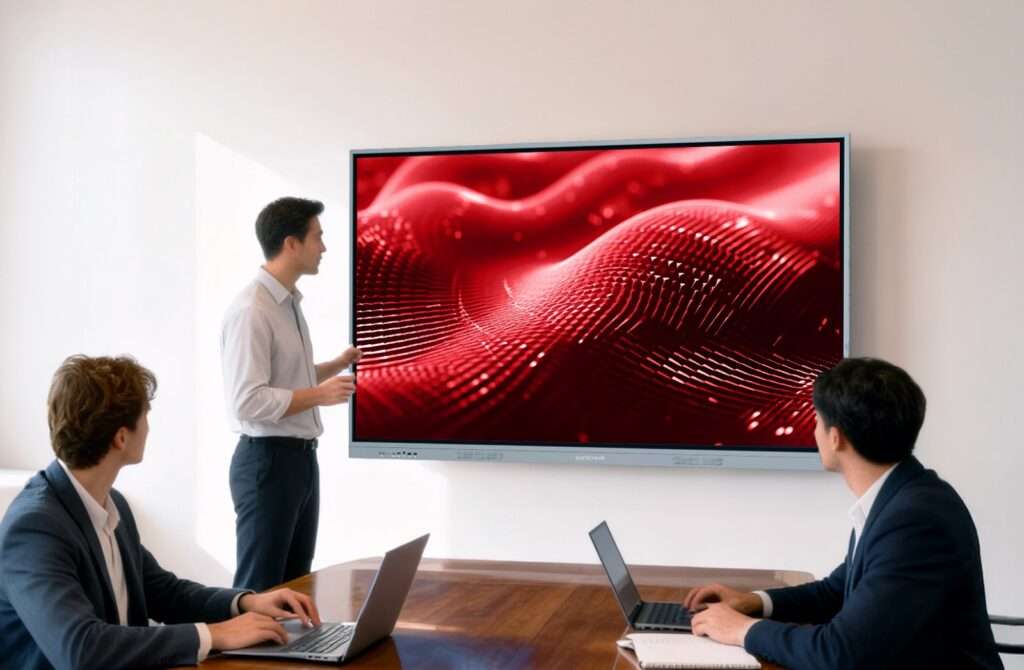
We’ve seen how quickly teams’ interactions and communication can change. A few years ago, meetings meant a projector, a whiteboard, and maybe an explosion of sticky notes. Teams struggled through awkward transitions between tools, slow brainstorming sessions, and painful follow-ups. But today, things are different. Teams want interaction, clarity, and results, not just slides. That’s where true collaboration technology enters the scene.
When we look at the evolution of shared workspace tools, nothing has reshaped interaction quite like interactive screens for meeting rooms. These are not just shiny displays. They are hands-on, real-time canvases where ideas get sketched, refined, saved, and shared without missing a beat.
Interactive Screens for Meeting Rooms That Actually Work
Whether it is in finance, education, or beyond, the shift is always the same. Teams stop passively relying on tools and start actively engaging with the screen, which changes the dynamic of meetings. People do not just watch content; they touch it, navigate it, and challenge it. Modern meeting room screens unify multiple functions, including digital whiteboards, video conferencing hubs, annotation tools, and wireless content sharing, into a single interface that feels natural to use and hard to step away from. This seamless flow means meetings end with decisions, not loose threads.
The practical impact is clear. In stand-ups, teams outline strategies directly on the screen. Marketing and product groups mark up visual assets in real time. Sales teams and clients explore data together without the constant back-and-forth of sending files. All of this happens with little to no learning curve, since the experience mirrors how we already use tablets and smartphones.
For hybrid teams, the benefits are even more significant. Interactive screens integrate with large-scale conferencing systems, allowing those who are not physically in the room to see and participate in what is happening live. This eliminates the distinction between “in the room” and “on the call,” leading to better communication and stronger understanding.
Conference Room Interactive Displays Are Designed for Collaboration
Not all screens are equal, which is why choosing the right one matters. A high-quality conference room interactive display is not just present in the room; it becomes central to effective internal communication. The best setups combine strong resolution, responsive touch interaction, and seamless connectivity. When that balance is achieved, the technology fades into the background, and the work takes center stage.
These displays often support multiple touch points, meaning two or more people can work on the screen simultaneously. That is especially valuable during brainstorming sessions or workshops where ideas should flow from everyone, not just from the person standing at the front. Many also include wireless screen sharing, making it simple to present from a laptop or phone with just a tap or click.
This combination of features is what makes these displays a staple in forward-thinking office spaces. Boardrooms, huddle rooms, and creative hubs are adopting them because they make meetings more efficient and more inclusive.
How to Choose the Best Interactive Screens for Office Collaboration
When organizations first explore their options, the common question is, “What type of interactive screen should we invest in?” The honest answer is that it depends on how your team works and what you are trying to achieve. Look for crystal-clear visuals that can be seen from every part of the room. Responsiveness is equally important, since lag or delayed touch can quickly kill momentum. Integration with tools your team already uses, such as video conferencing platforms and cloud storage, is also critical.
In practice, the best interactive screens for office collaboration are the ones that allow everyone to jump in and get to work immediately, without wrestling with settings or connections. Technology should not require hours of preparation just to function properly. From experience, prioritizing real-world usability delivers far greater value than chasing specifications alone.
Why Sonichive Is a Partner Leaders Trust
At Sonichive, we have spent years working with organizations to rethink how technology supports collaborative workspaces. Our focus is on creating environments that are not only functional and modern but also transformative in how people interact with one another and with their work. We begin with a conversation about your workflow and goals, not a product pitch.
We do not chase trends for the sake of novelty. Instead, we observe how teams operate and identify where friction occurs. Our goal is to use technology to remove friction, not add to it. That is why many organizations come to us not only for screens but also for strategic guidance in designing spaces that encourage participation, creativity, and clarity.
Why This Approach Pays Off
Teams invest in interactive screens because the benefits are measurable, not theoretical. Meetings conclude with clear action items. Remote workers remain engaged and involved. Brainstorming sessions are captured and archived without frantic note-taking afterward. From a cost perspective, stronger collaboration often leads to faster decisions and fewer follow-up meetings, freeing up valuable time and focus for meaningful work.
We always emphasize that collaboration technology is not about owning the most advanced device. It is about choosing tools that align with your workflows and help people think better together.
Collaboration Beyond the Screen
The future of teamwork will not rely solely on interactive screens, but there is no denying that this technology represents a significant advancement. It changes how teams use their collective time, how they visualize problems, and how they bring diverse perspectives into the conversation.
Interactive screens for meeting rooms, along with high-quality collaboration displays for conference rooms, are becoming foundational elements of modern workplaces. However, understanding how to choose and use the most effective interactive screens for office collaboration is what will separate companies that truly excel from those that simply keep up.
If you are looking for collaboration that feels natural and effortless rather than frustrating and tedious, interactive screens are not just a passing trend. They are a powerful step forward.