
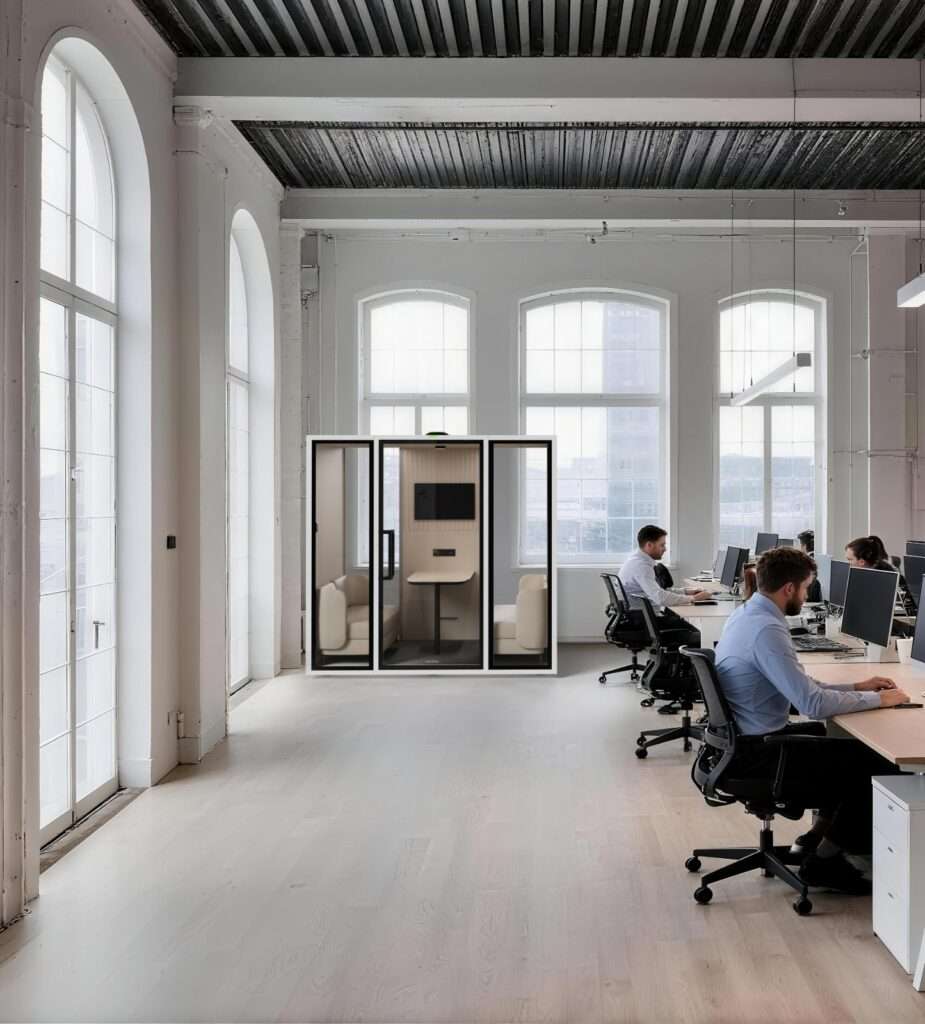
A decade ago, there was a lot of talk about open offices being the office of the future. The benefits are less structure, more collaboration, and a rapid exchange of ideas. The problem for teams, however, was that they found something entirely different. We are no longer debating the effectiveness of open office environments. We are instead trying to find a means to correct the wrongs that were introduced with open offices without reverting to the closed cubicles of the past. In the view of Sonchive, this trend has been evident in all spheres of life, from tech startups to the finance and artistic worlds. The methods that are really on the move do not lie with louder collaborative areas and better meeting policies.
The idea of acoustic pods for offices often invokes images of novelty phone booths or design add-ons. That notion is extinct. Modern-day pods are architectural tools rather than design accessories. They create instant rooms inside open layouts without construction, without downtime, and without permanent change.
We see pods being used as private focus spaces, one-on-one meeting rooms, and quiet zones for deep thinking. That’s where their value lies-in flexibility. Teams change, headcount shifts, and work styles evolve. Pods allow offices to adapt without tearing down walls every year. By 2026, adaptability is no longer a bonus; it is an expectation.
Office acoustic pods are no longer “upgrades to be desired,” says project manager Devora Matthews, and are now office furniture essentials. “The nature of work itself is what is propelling this increased adoption.” With new work schedules, there will be fewer employees in the office at any given time, but when they do arrive, the office needs to be functional, not just occupied.
This is something we hear again and again from leadership teams. If people are commuting in to work, they require spaces to enable them to focus, interact, and recover. Pods achieve that mix. They enable privacy without isolation and structure without rigidity. In the new thinking about offices, pods integrate seamlessly into that model.
Reducing noise in an open office through policy is not very effective. Asking people to keep noise levels down and not make too many calls is not a practical request. Effective noise management needs to be incorporated in the design of the office space itself.
Acoustic pods absorb and hold the sounds that are produced in them. Calls remain in the pods where they are made. Conversations no longer leak between desks. The background noise level decreases without any of them ever adjusting how they get their work done. Eventually, this results in quieter offices with fewer interruptions and no tension between departments. It is no longer quiet; it is now control that offices had lacked.
How Pods Help Improve Workplace Productivity
When talking about ways to improve workplace productivity, big returns are often gained by subtraction rather than addition. Noise is one of the most persistent productivity killers we come across. Concentration gets broken, the number of task switches increases, and hours get extended.
Pods give people a place to finish complex tasks in one sitting. They reduce the mental tax of constant interruption. Teams report faster turnaround times and better quality output, not because they work harder, but because they can finally work properly. In 2026, productivity is less about speed and more about sustained focus.
Solutions for employee focus groups abound, from apps to wellness initiatives. They tend not to work because they target people, not environments. The problem with focus is not a people problem, but a design problem.
Acoustic pods solve the problem of focus at its source. Visual and acoustic separation are provided without isolating workers from the culture in which they exist. Workers can enter, focus, and exit. This cycle promotes natural work rhythms rather than imposing artificial ones on workers. Satisfaction increases, not because acoustic pods are impressive, but because they work well.
Noise distraction at work rarely shows up in performance reviews, but it shows up everywhere else. In stress levels, burnout, and disengagement. People don’t complain; they disengage quietly.
Pods offer relief without killing openness. They let offices maintain collaborative energy while giving individuals control over their attention. This becomes more important than ever as roles get cognitively demanding. In our experience, reducing noise is among the quickest ways to improve how people feel at work.
Workplace wellbeing solutions are often framed around perks: meditation rooms, lounges, and wellness days. These things have their place, but they do not address daily stressors. Noise is a daily stressor.
Acoustic pods are a contributor to wellbeing by reducing cognitive overload. They support privacy, reduce social strain, and give people permission to focus without explanation or justification. This kind of wellbeing is quiet, invisible, but deeply effective. In 2026, wellbeing will be measured less from the programs than by how the spaces support mental clarity. At Sonchive, we design pods based on offices that exist in reality rather than those in presentations. Our experience comes from observing real workplaces, understanding constraints, and designing solutions that fit seamlessly.
We pay close attention to acoustics, airflow, comfort, and durability, because those are the details that make the difference between a pod that gets used or one that doesn’t. Our approach is consultative: we look at layout, usage patterns, and team needs before recommending solutions. This is not about filling space. It’s about making space work better.
Clients choose Sonchive because we think beyond products. We see acoustic pods as part of a greater workplace strategy. When correctly placed and designed, the pods reduce friction, support performance, and extend the life of open offices.
The return shows up in quieter floors, fewer complaints, and higher engagement. Most importantly, it shows up in how people choose to work. When employees voluntarily use a space, you know it is working. The open office is not disappearing. It’s evolving. In 2026, successful workplaces will be defined by choice, flexibility, and respect for focus. Acoustic pods will play a central role in that evolution.
At Sonchive, we believe a future office is neither louder nor quieter by default; it is smarter. Smart offices give people the environments they need, doing the best work right when they need it.